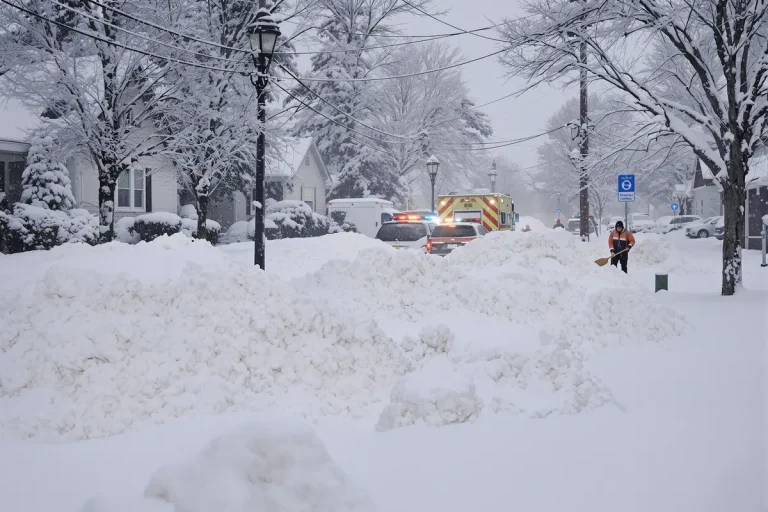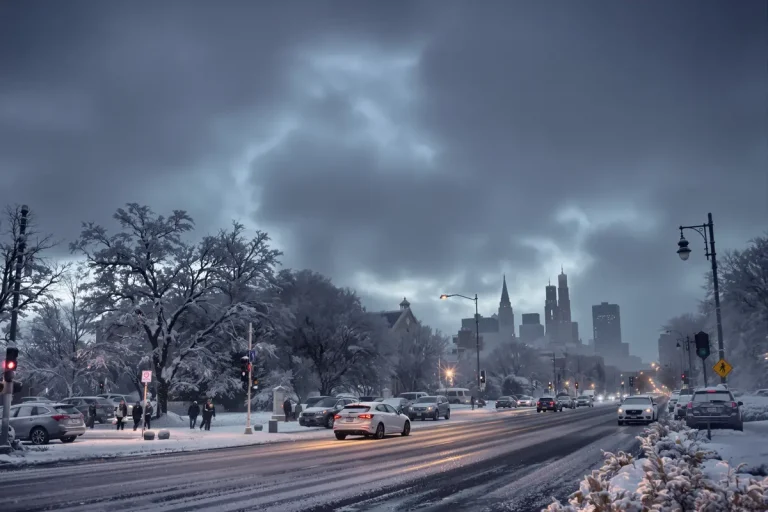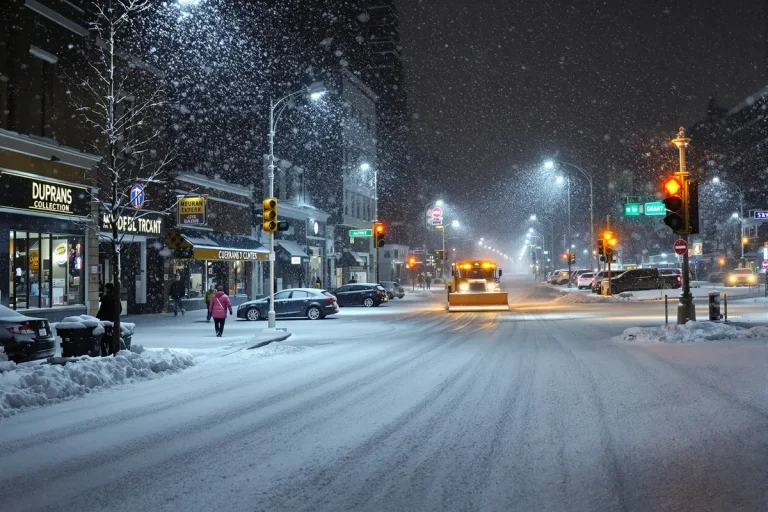
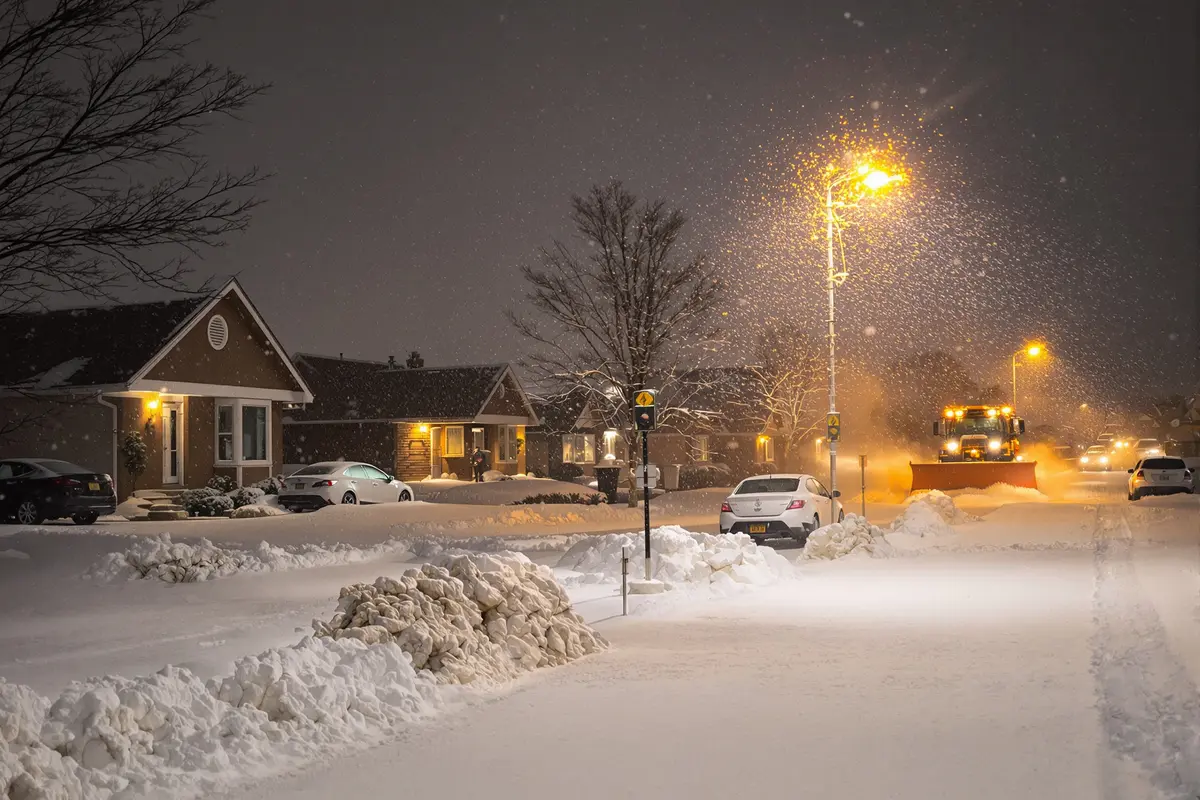
As the snow began falling gently in the late afternoon, it all seemed harmless. A quiet beauty, even. But within hours, peace gave way to urgency. Heavy snow swept in fast, turning streets into ribbons of ice. By nightfall, emergency alerts lit up phones across town with a single message: stay home tonight.
Snowstorms aren’t just scenic—they’re dangerous
When snow covers the ground, it hides more than sidewalks and rooftops. It conceals ice, makes roads unpredictable, and cuts visibility in seconds. What starts as a soft flurry can quickly become a whiteout, especially as temperatures hover near freezing.
This storm is expected to dump 8 to 12 inches of snow overnight. That’s enough to erase road markings, bury driveways, and turn even short trips into risky adventures. Already, drivers are struggling—black ice is forming at intersections, and winds are swirling flakes into a steady white curtain.
Traffic cameras have shown the rapid shift. Around 4:30 p.m., cars still moved steadily. By 6 p.m., headlights were crawling, brake lights clustering, and snow lined tire tracks like frozen ridges. It’s no longer about beating traffic—it’s about making it home safely, if you haven’t already.
Why authorities are urging you to stay put
The warnings aren’t meant to alarm you—they’re meant to protect you. Highways, local roads, even neighborhood streets are changing by the minute. And winter storm physics don’t care how experienced a driver you are.
Here’s why tonight is particularly tricky:
- Temperatures near freezing mean roads can freeze fast
- Falling snow hides icy patches, making them nearly invisible
- Four-wheel drive may help you move, but not stop
- Anti-lock brakes keep you steering, not safe on ice
That illusion of control is dangerous. People often think, “It’s just a short drive.” But when visibility vanishes or ice surprises you mid-turn, the outcome can change in seconds.
What to do if you absolutely must drive tonight
Some people don’t have the luxury to stay home—nurses, first responders, delivery teams, utility workers. If that’s you, every bit of preparation matters.
Here are key steps to take before hitting the road:
- Clear every window. Not just a peephole—full visibility matters.
- Brush off the roof to prevent snow sliding down onto your windshield.
- Pack your car with basics: a blanket, gloves, flashlight, scraper, small shovel, charger, water, and snacks.
- Stick to plowed roads. Avoid shortcuts and side streets if you can.
- Slow way down, give other drivers space, and turn on full headlights—not just the daytime lights.
It’s not about being dramatic. It’s about reducing risk in conditions where small mistakes have big consequences.
One night, one choice, many stories
Tonight’s storm may be memorable. Maybe by tomorrow it’s just slush at the curb. Or maybe it’s the kind of storm people remember for years. That depends partly on the snow—and partly on the decisions people make tonight.
Rescheduling dinner, telling a teen the car’s staying parked, or sending a quick “stay safe” text are simple actions. But they matter. They ease the load on first responders, reduce accident risk, and protect your community.
City crews will be out late, looping roads again and again. Tow trucks will work into the early hours. Hospitals are already bracing for slips, falls, fender-benders. All of that builds from the choice made in each driveway.
Essential safety FAQs for snow travel
Should I drive tonight if my car has four-wheel drive?
No, unless it’s essential. Four-wheel drive helps you get going—but not stop on ice. The weather doesn’t care what you drive.
What counts as essential travel?
Jobs in critical services, urgent medical visits, or necessary family support. If it can wait, let it wait.
How slow is safe on snowy roads?
Authorities say far below the speed limit. Go half the limit or less depending on the conditions. If you’re unsure, slow down more.
What should I keep in my car tonight?
- Blanket, gloves, and hat
- Ice scraper and small shovel
- Flashlight and phone charger
- Water and dry snacks
- Basic first aid kit
When will roads be safe again?
It depends on how much snow falls, how cold it stays, and how quickly plows move. Check local traffic apps and city updates for the latest.
You don’t need to be a hero—just be smart
No one’s handing out awards for braving the snow tonight. But staying in? That’s not weakness. That’s wisdom. It’s the kind of common sense that keeps people out of ERs and tow yards.
This storm will pass. But the safest place to ride it out isn’t behind the wheel—it’s inside, warm and waiting for morning. So tonight, repeat the message authorities are sending: stay home, stay safe, and give the snow the space it demands.